Walking:Holding
Rosana Cade
Performance, 2011-Present
What does your town look like from someone else's perspective? How intimate can you be with someone you've just met?
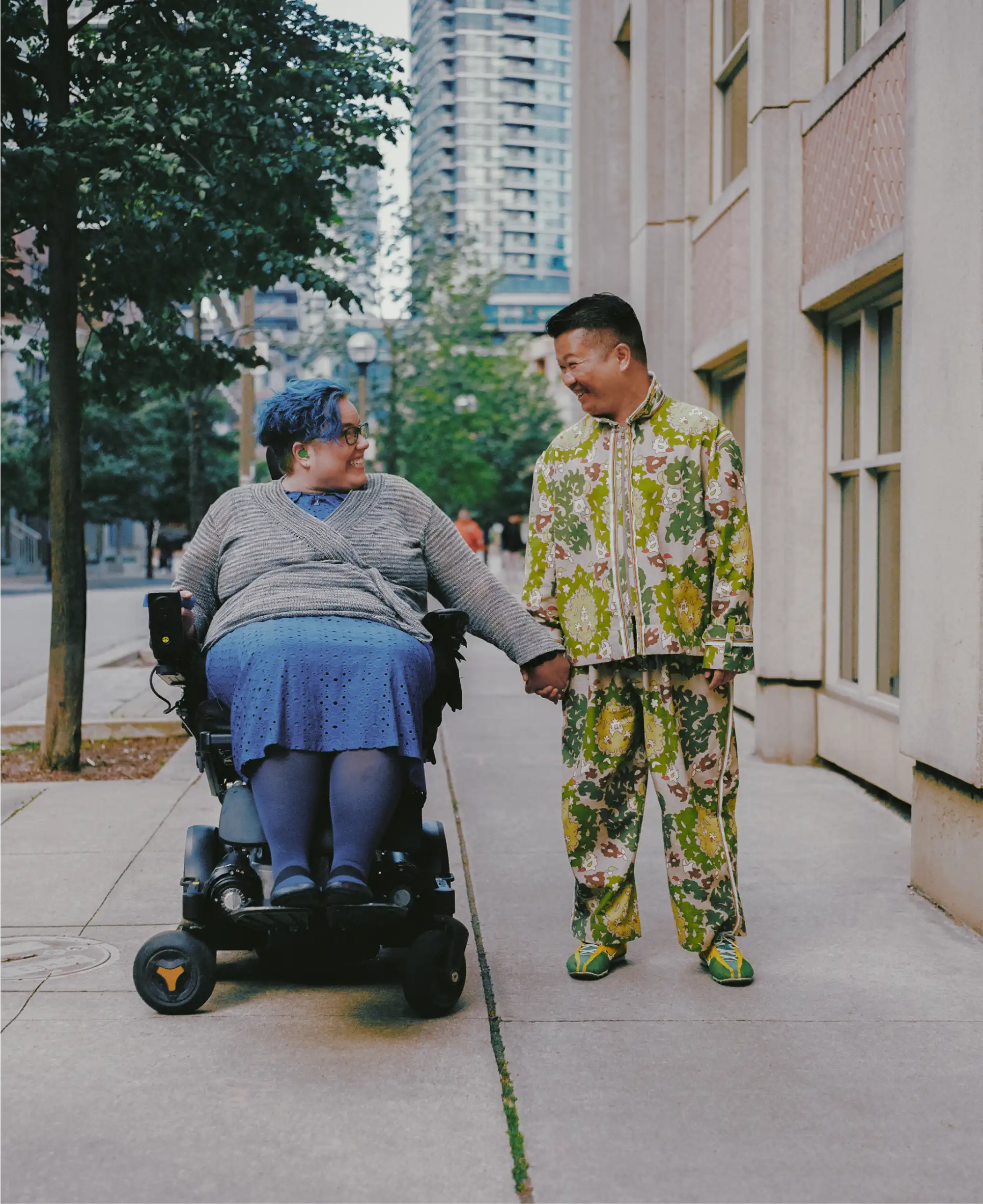
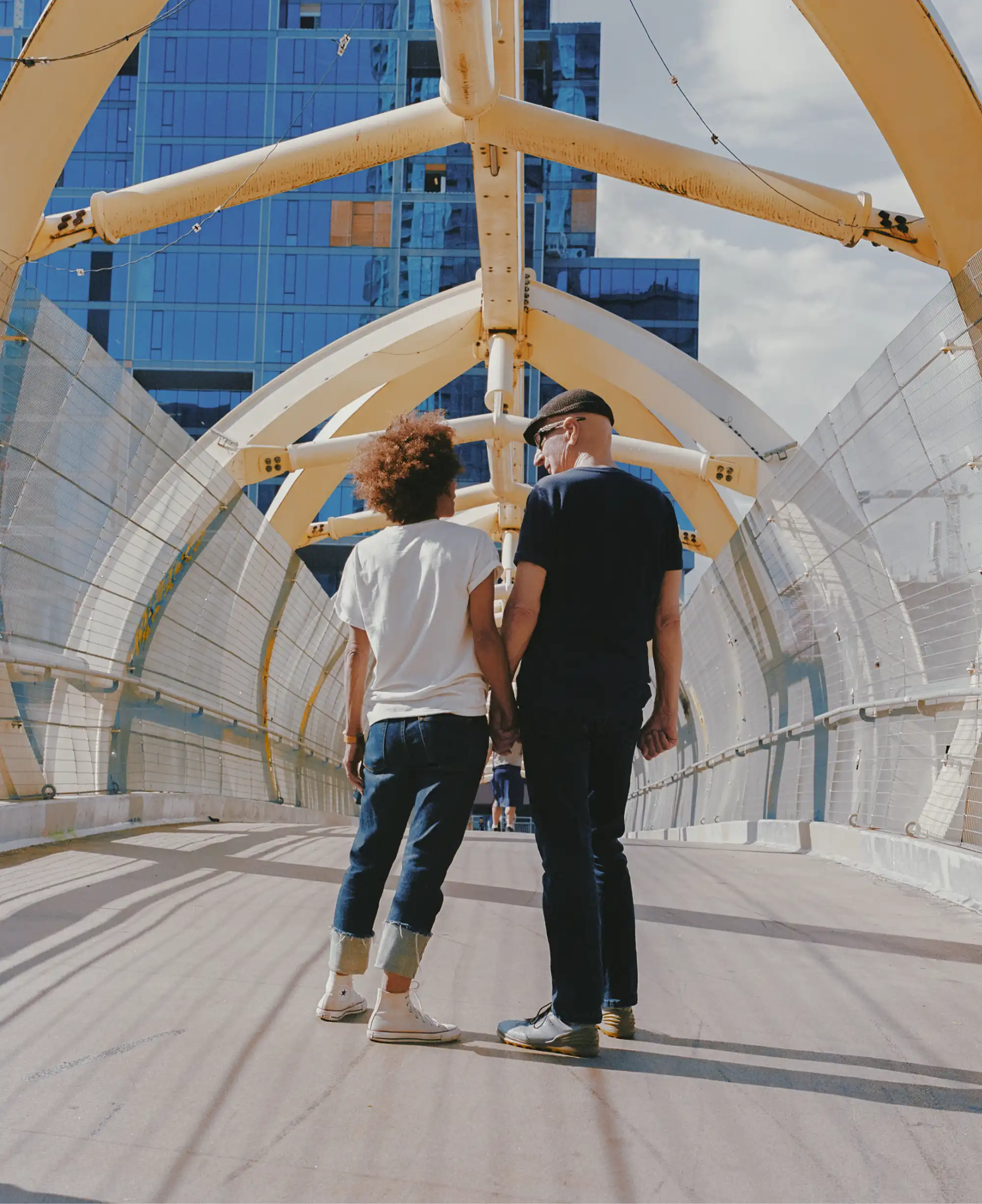
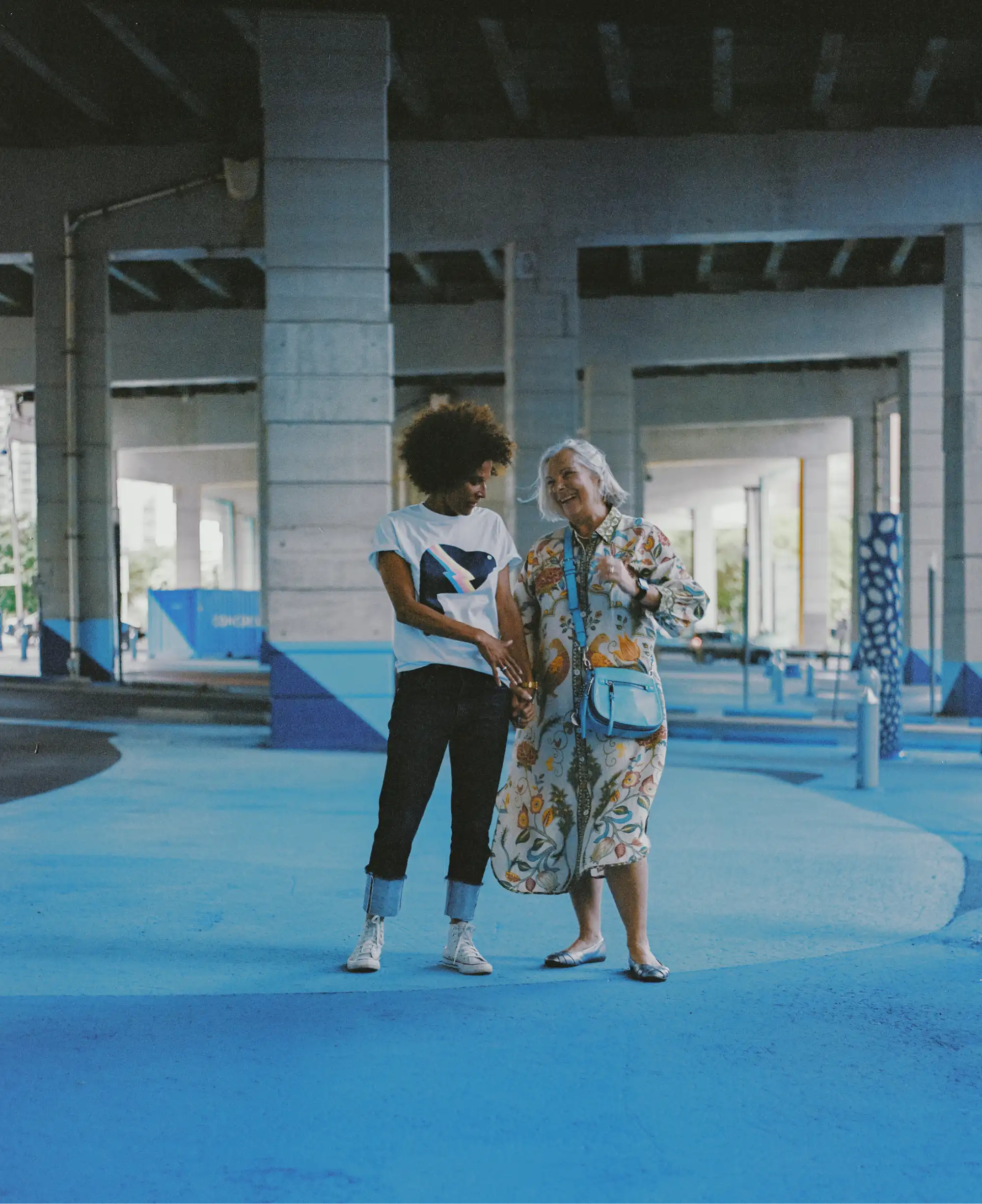
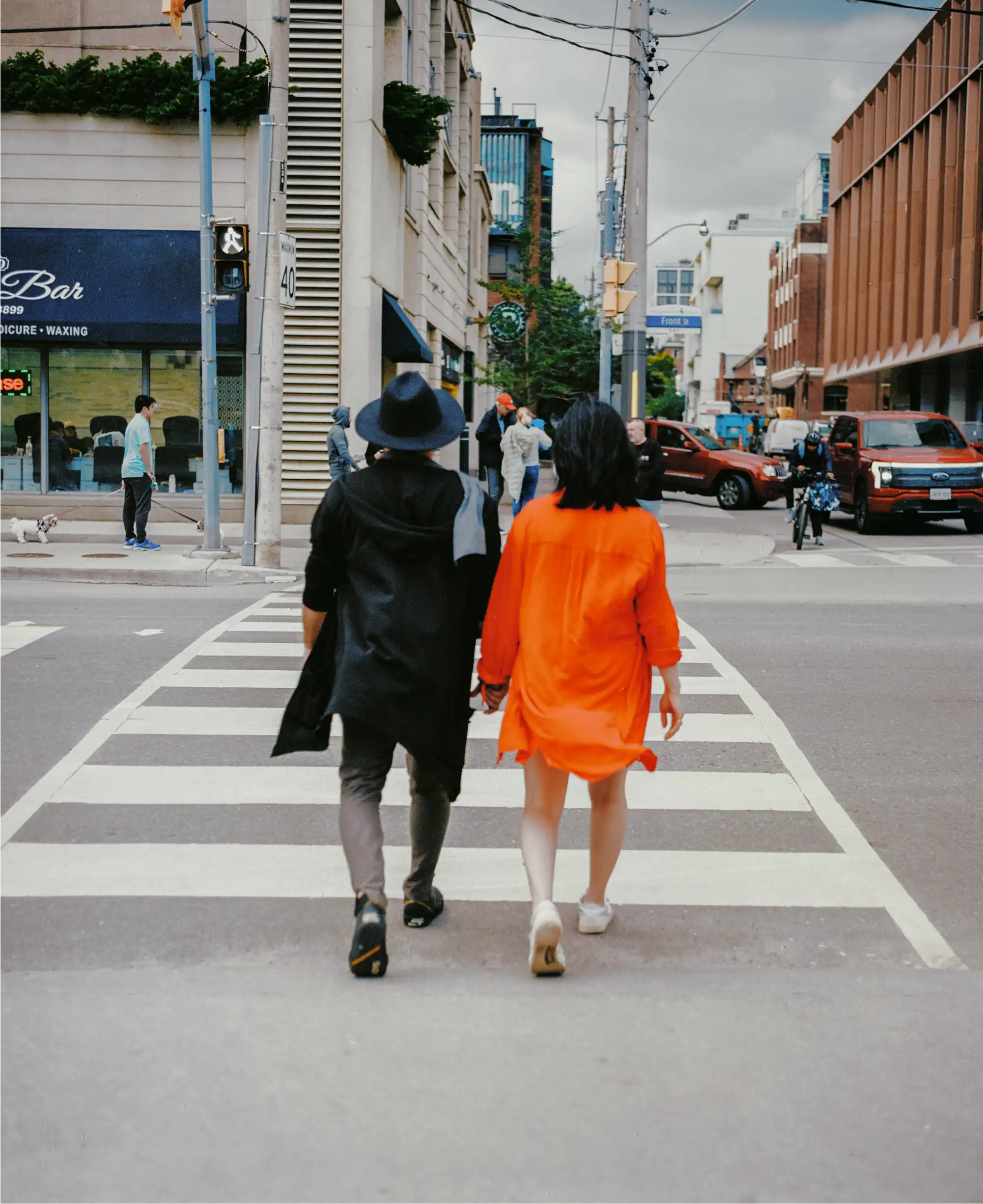
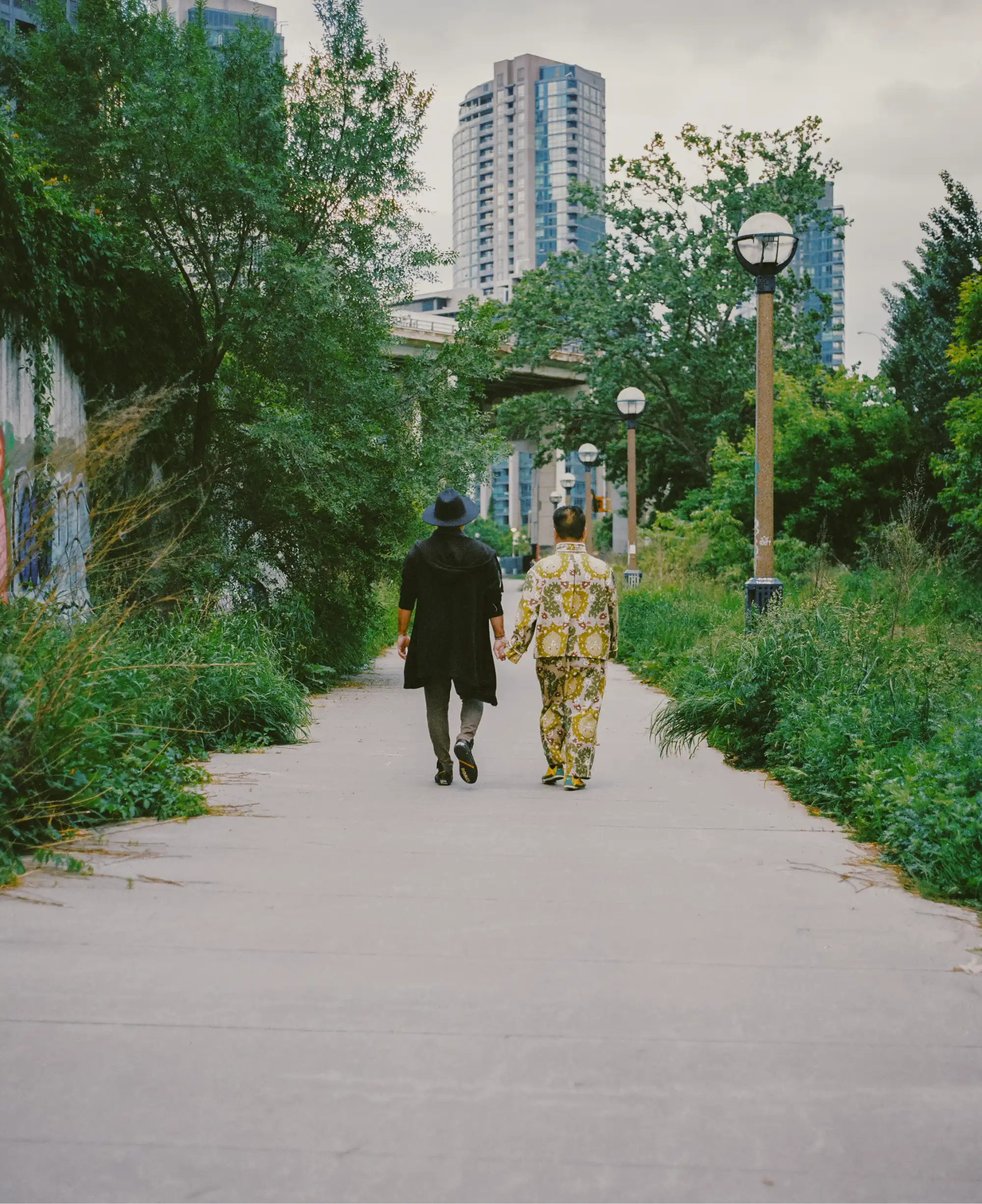
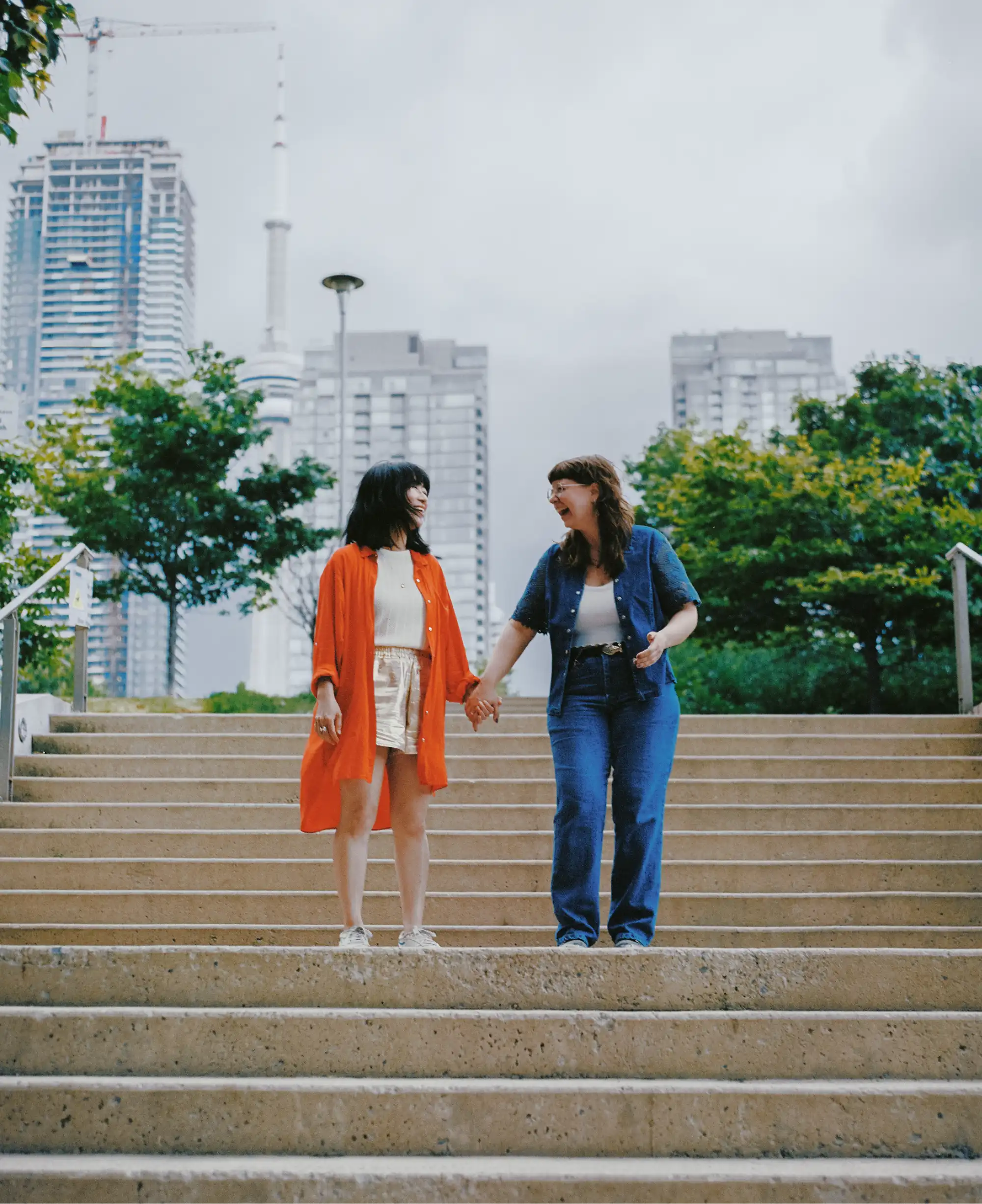
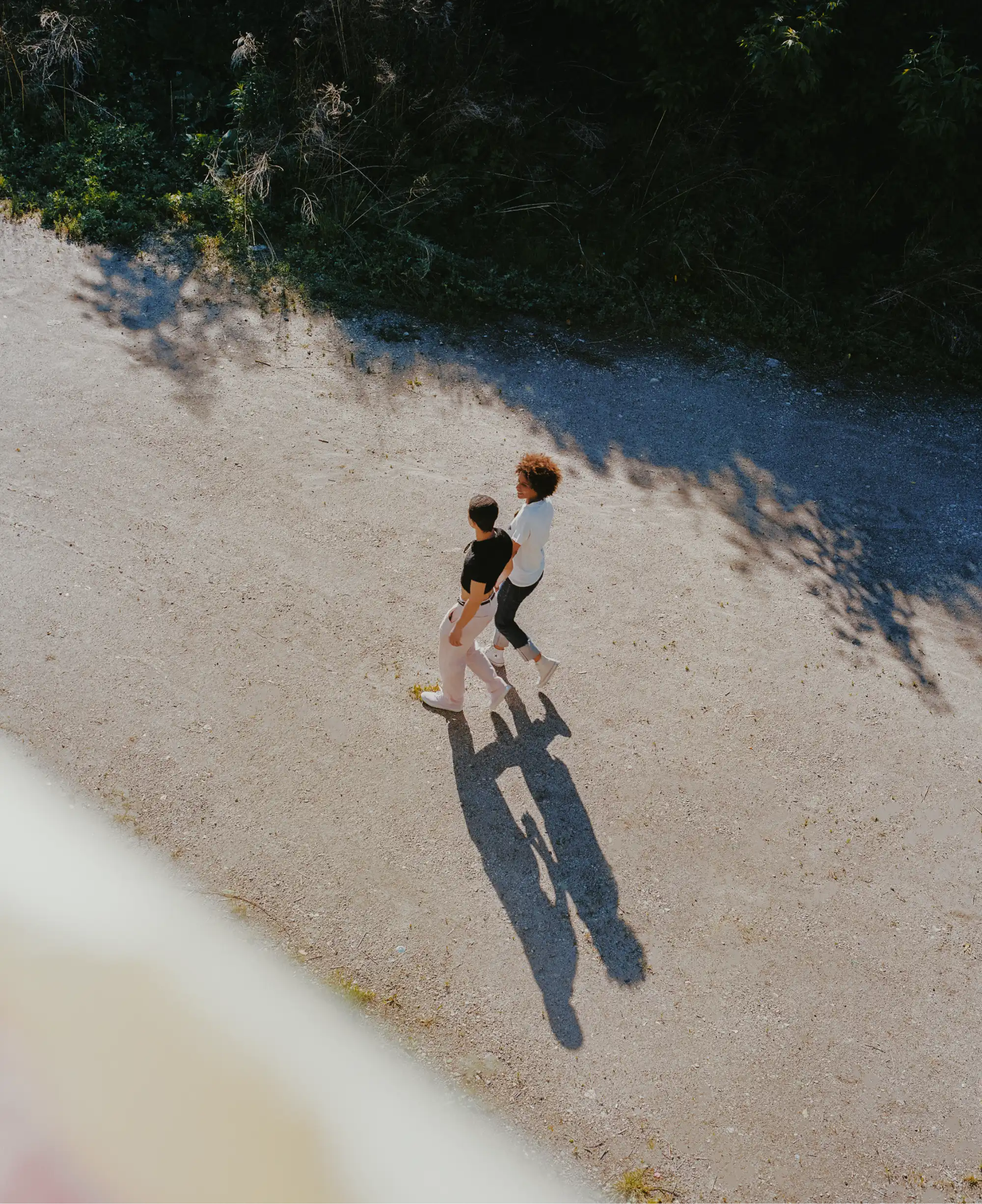
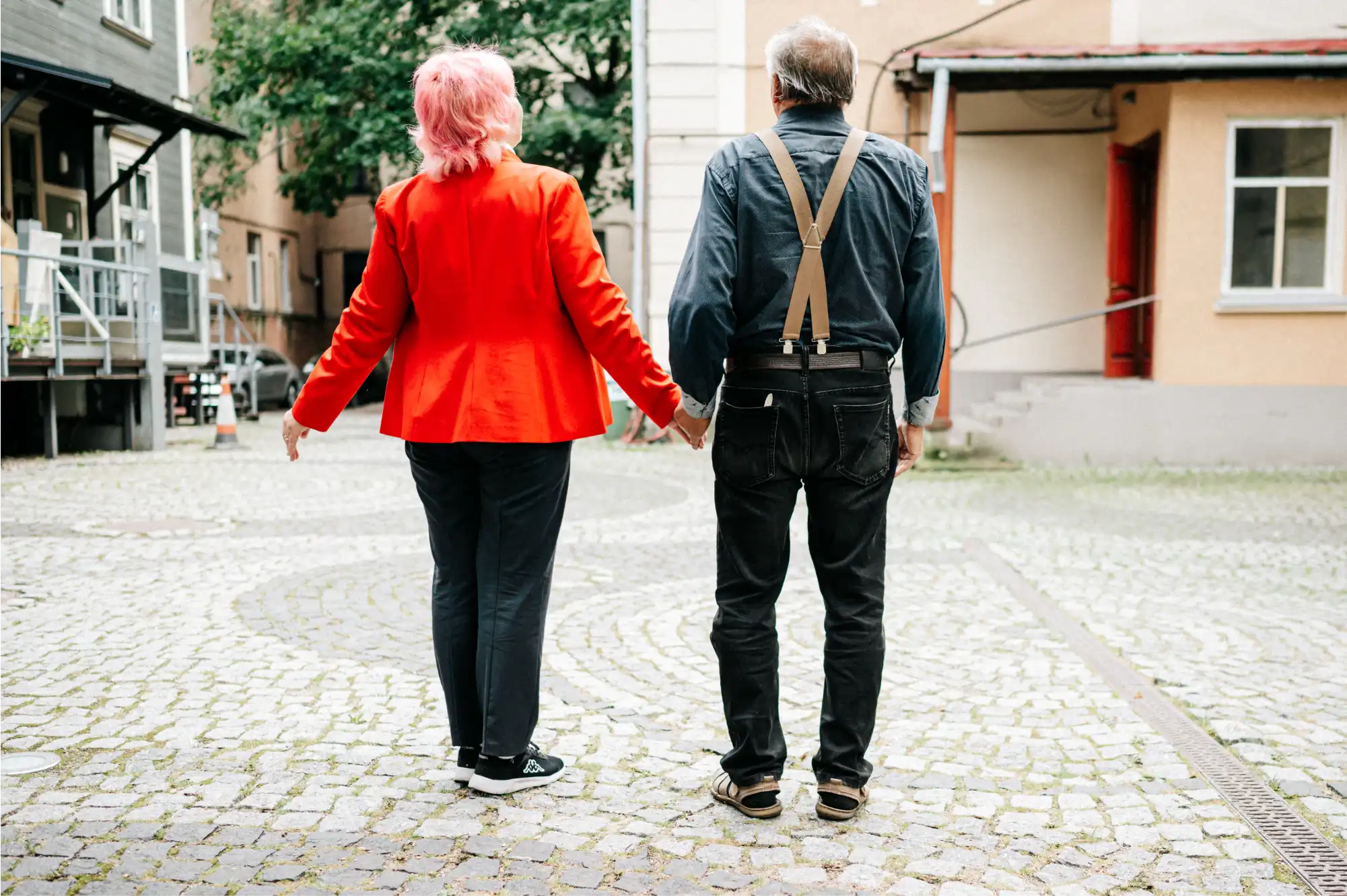
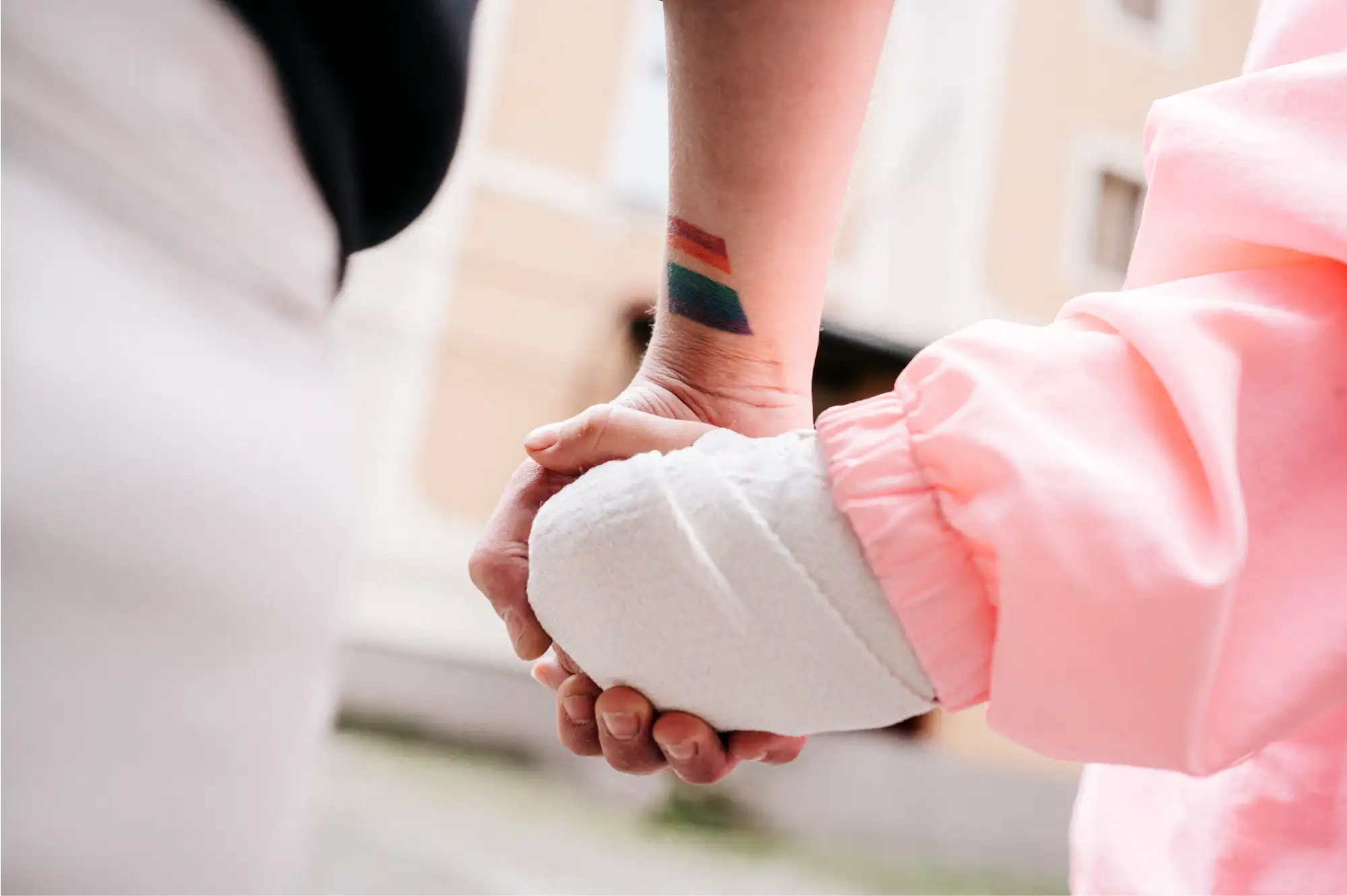
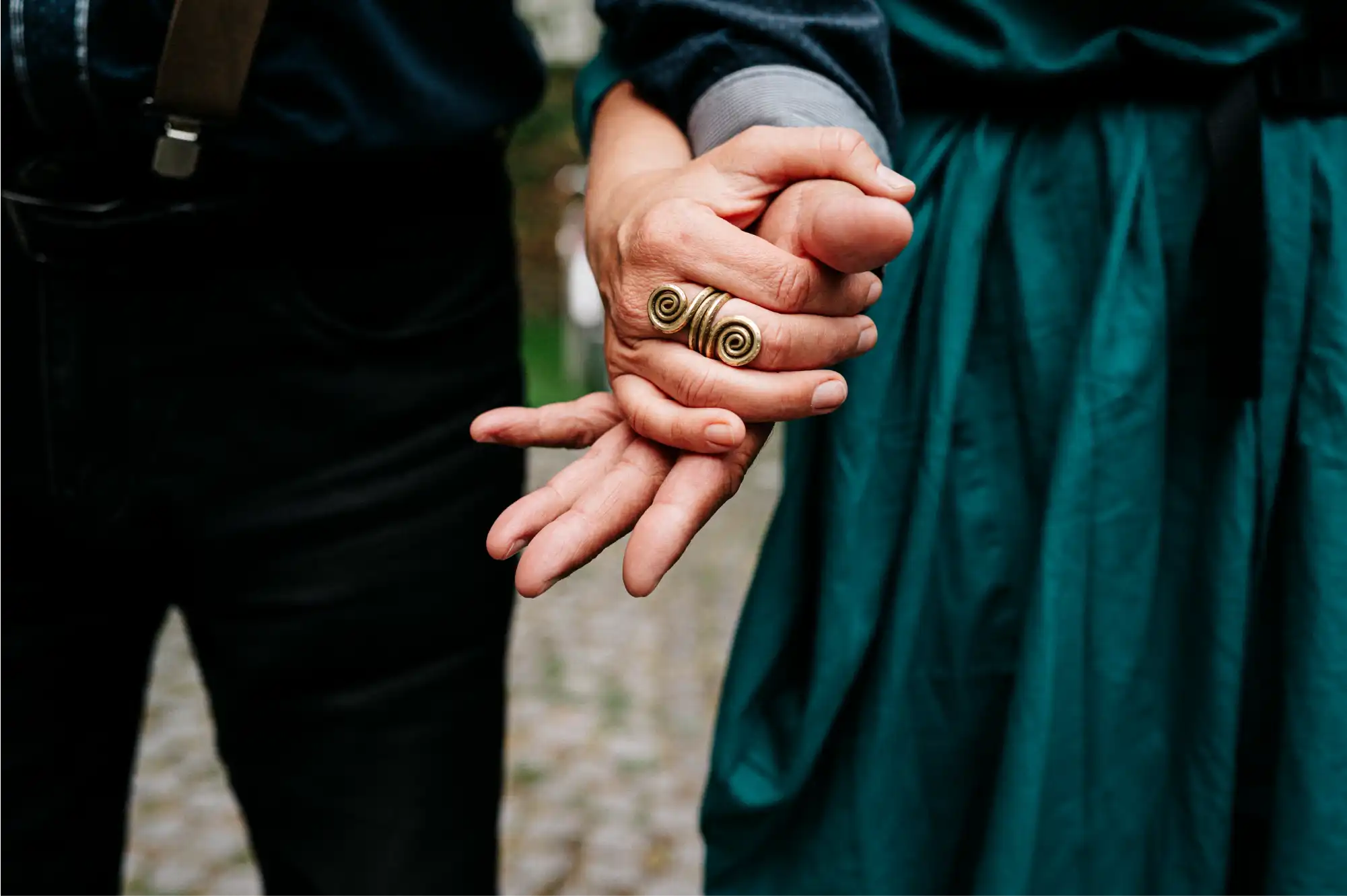
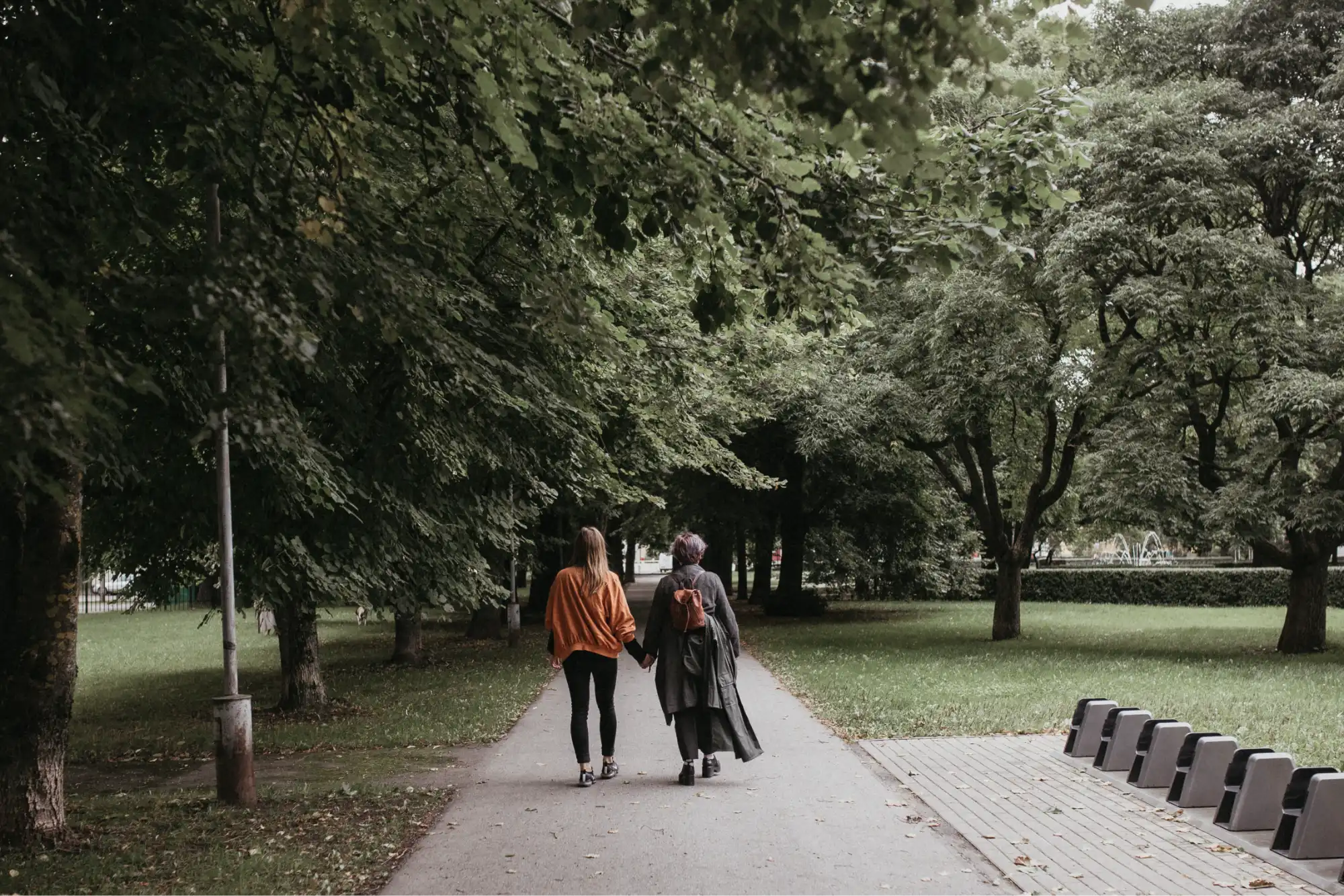
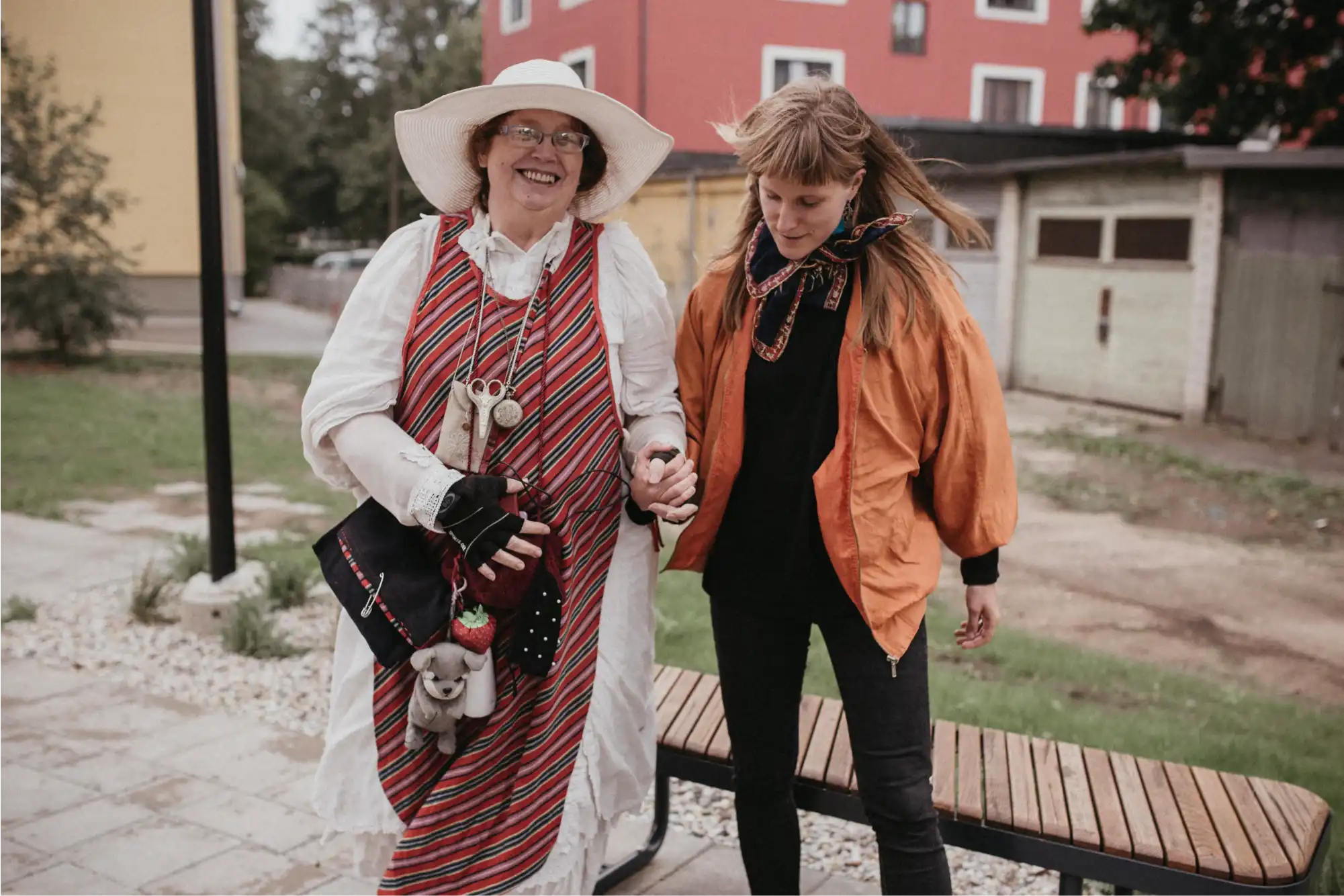
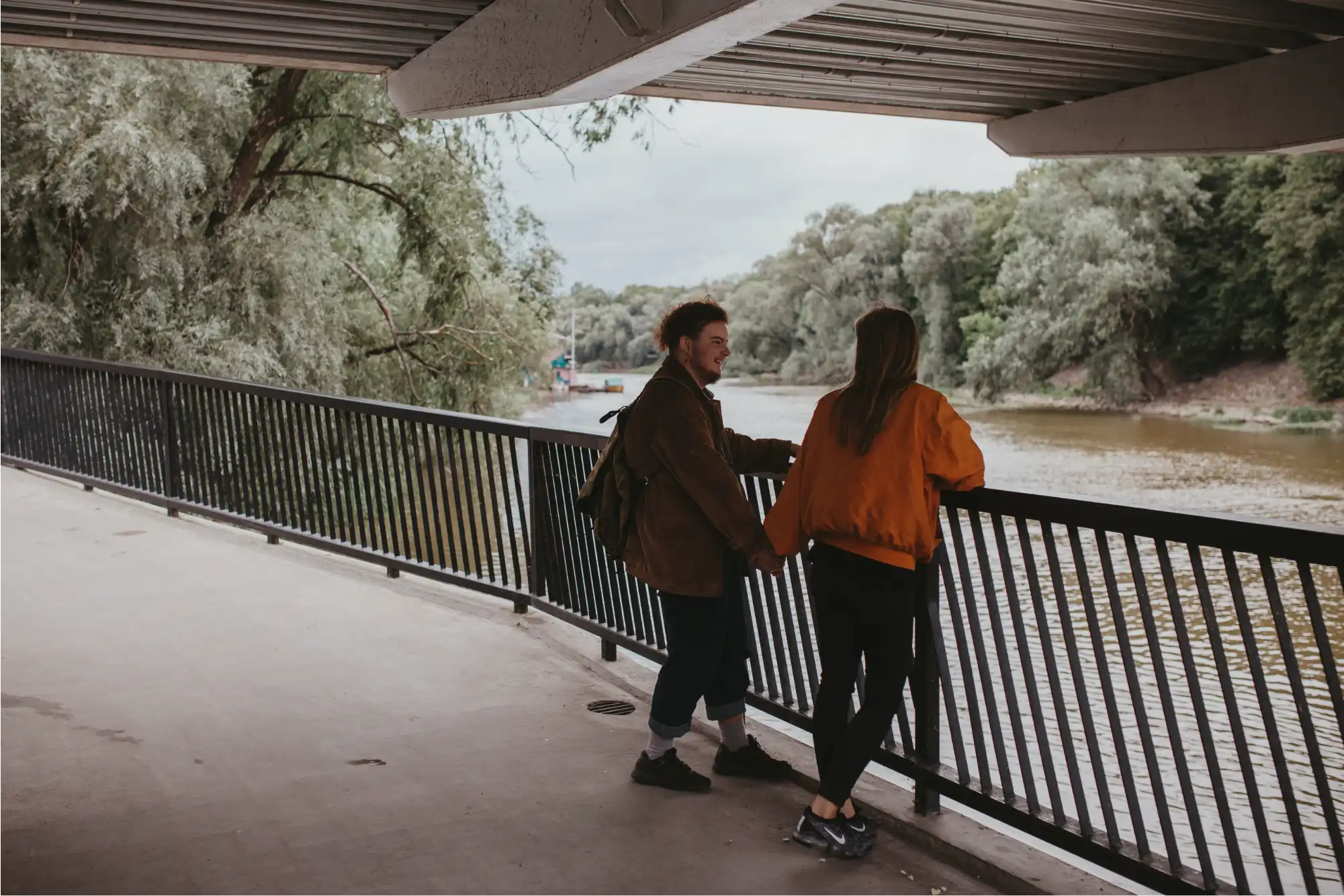
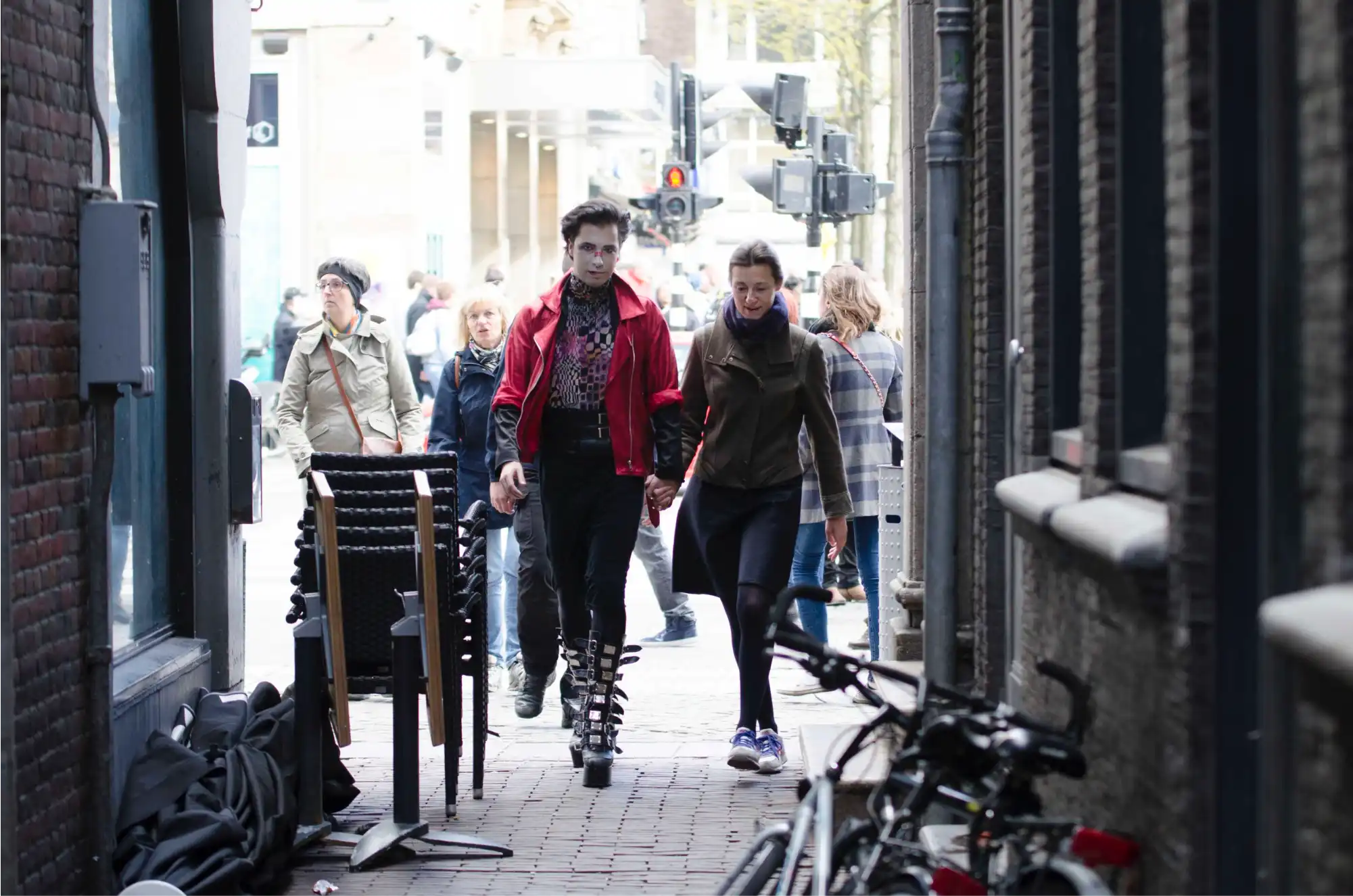
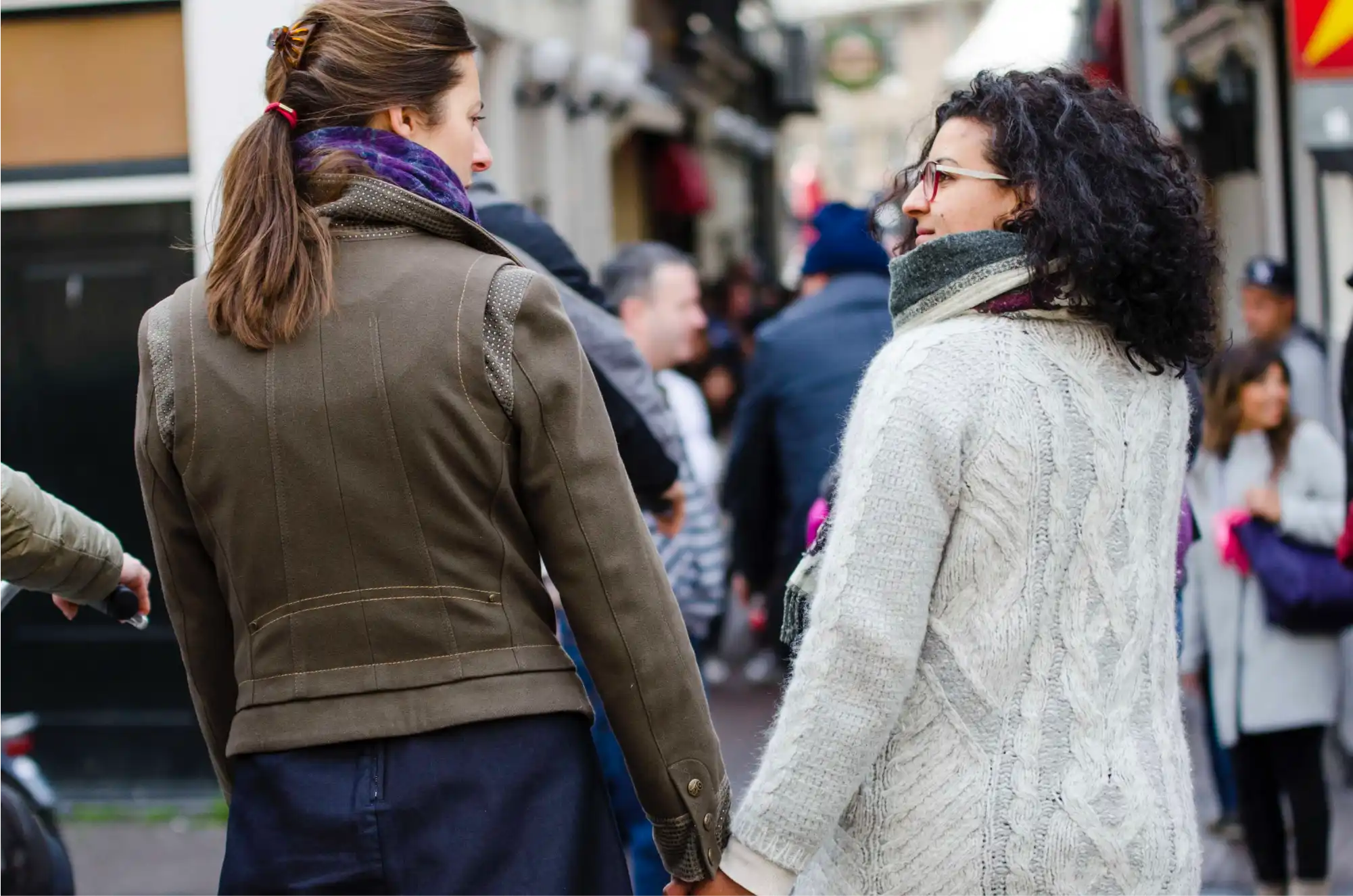
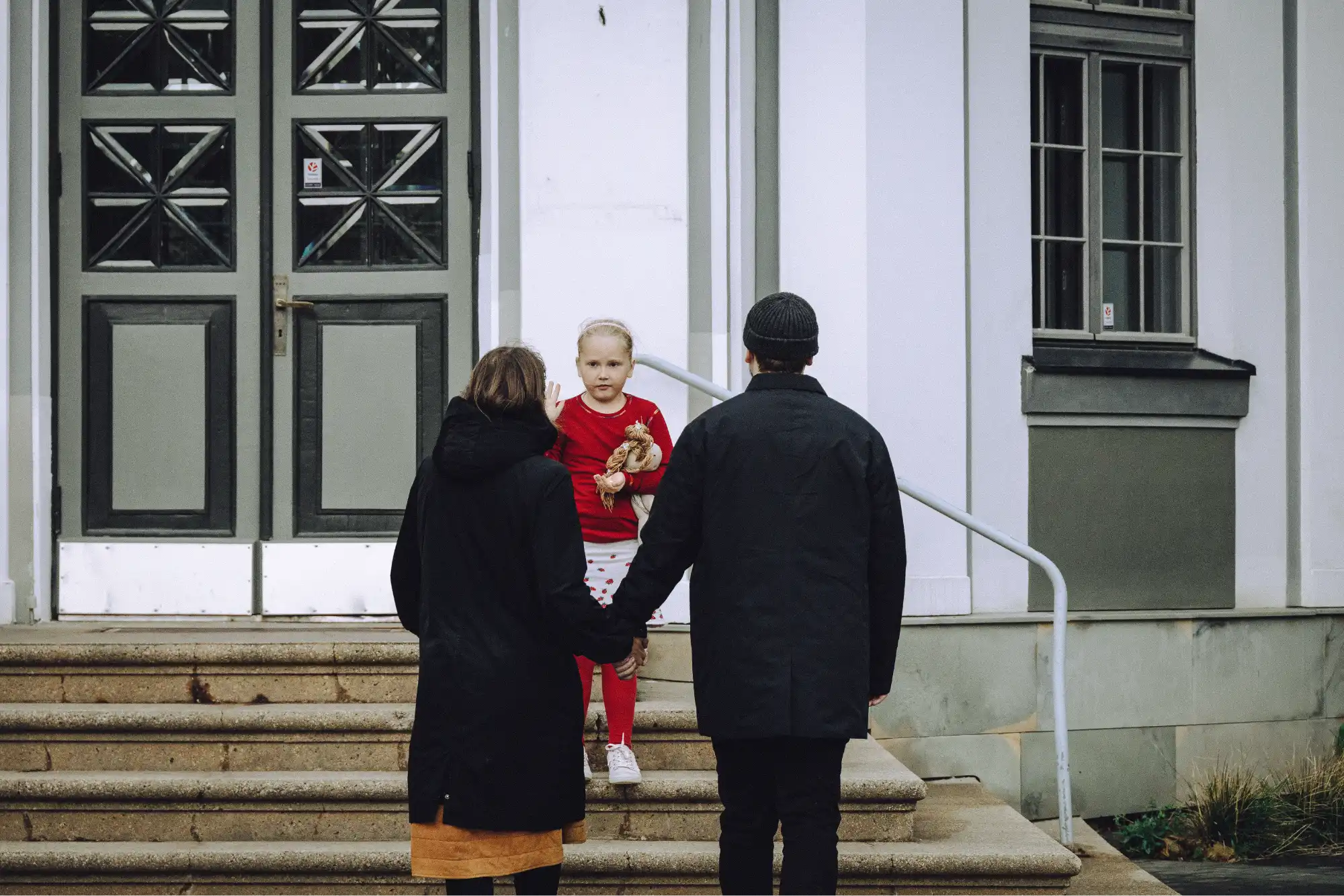
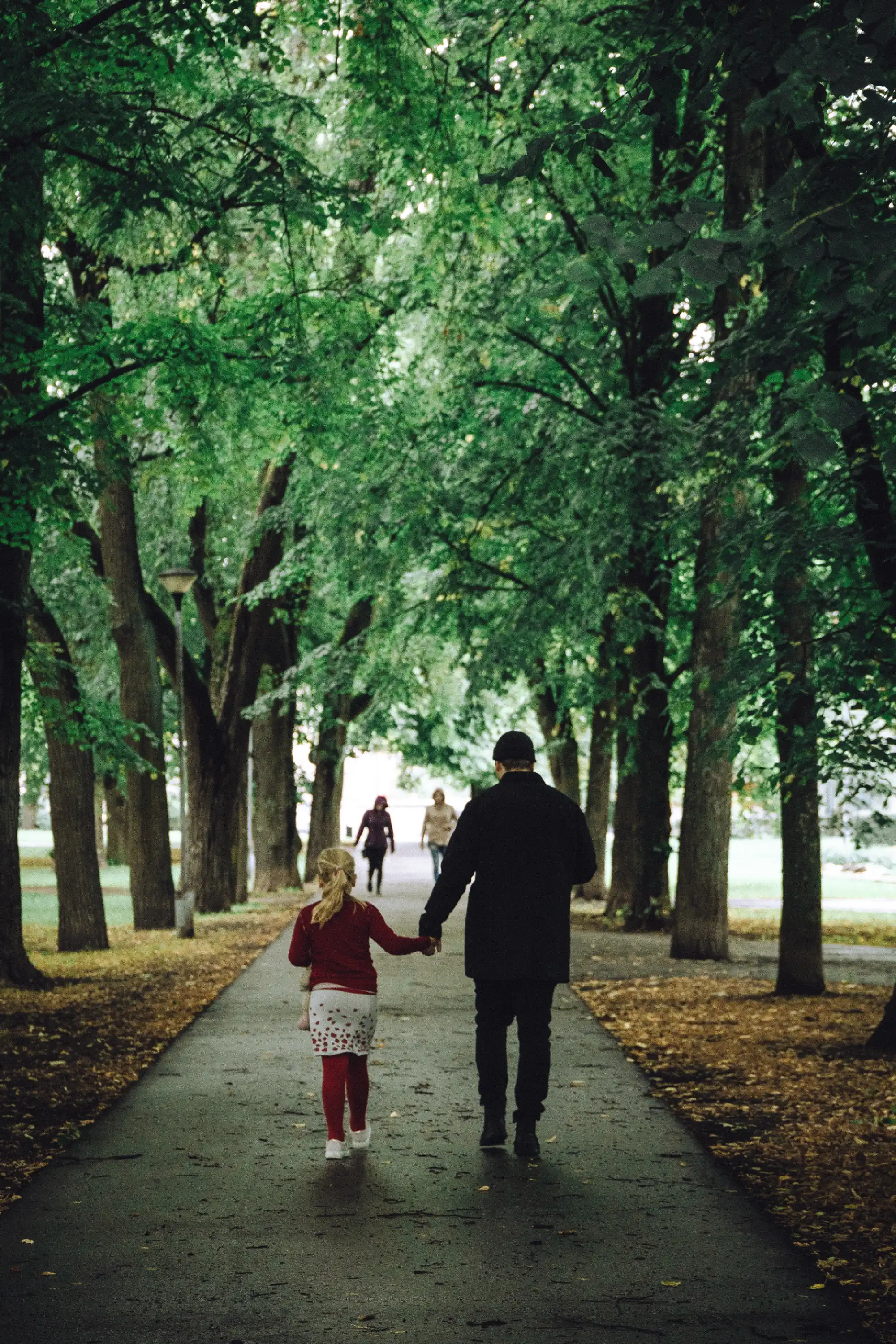
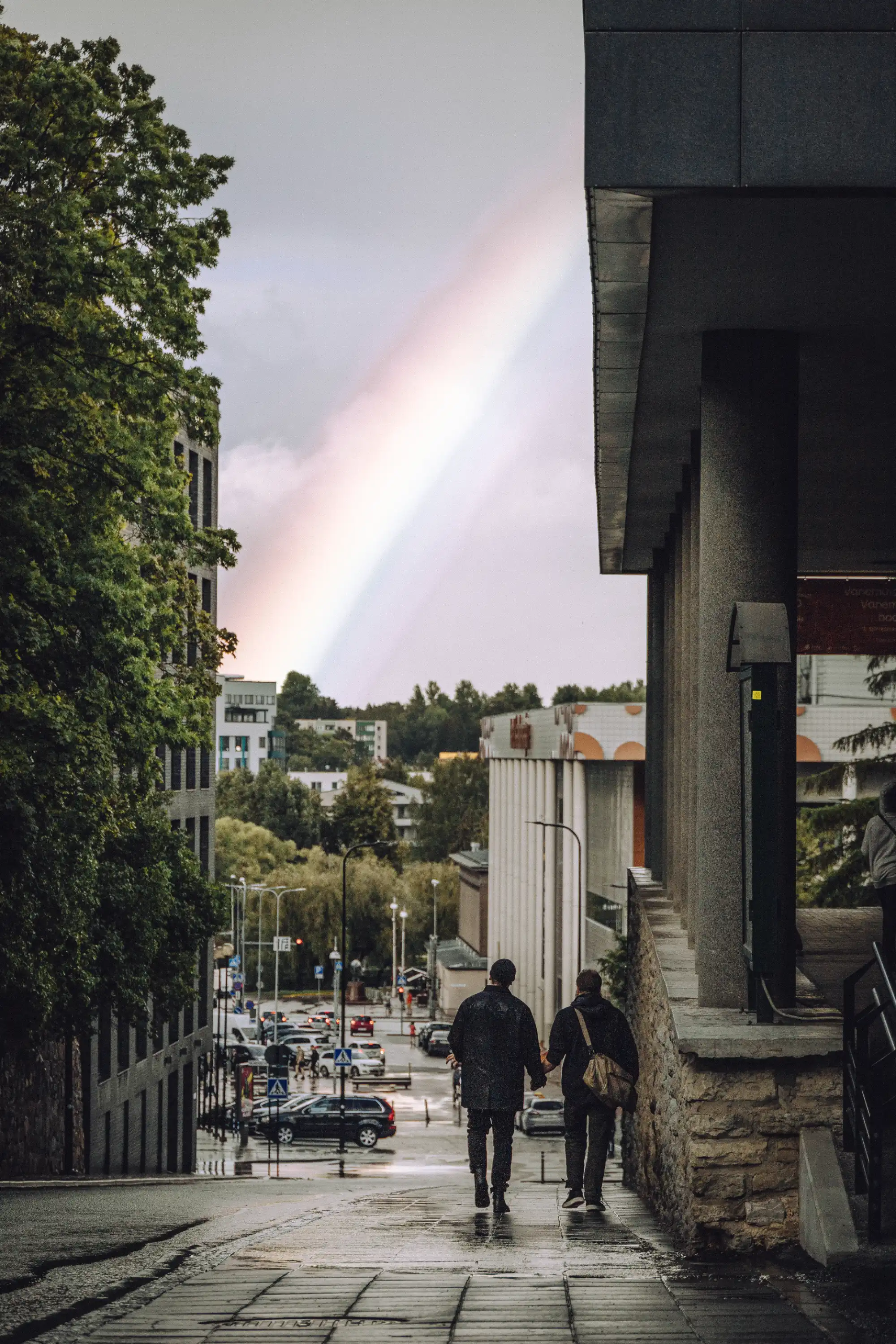
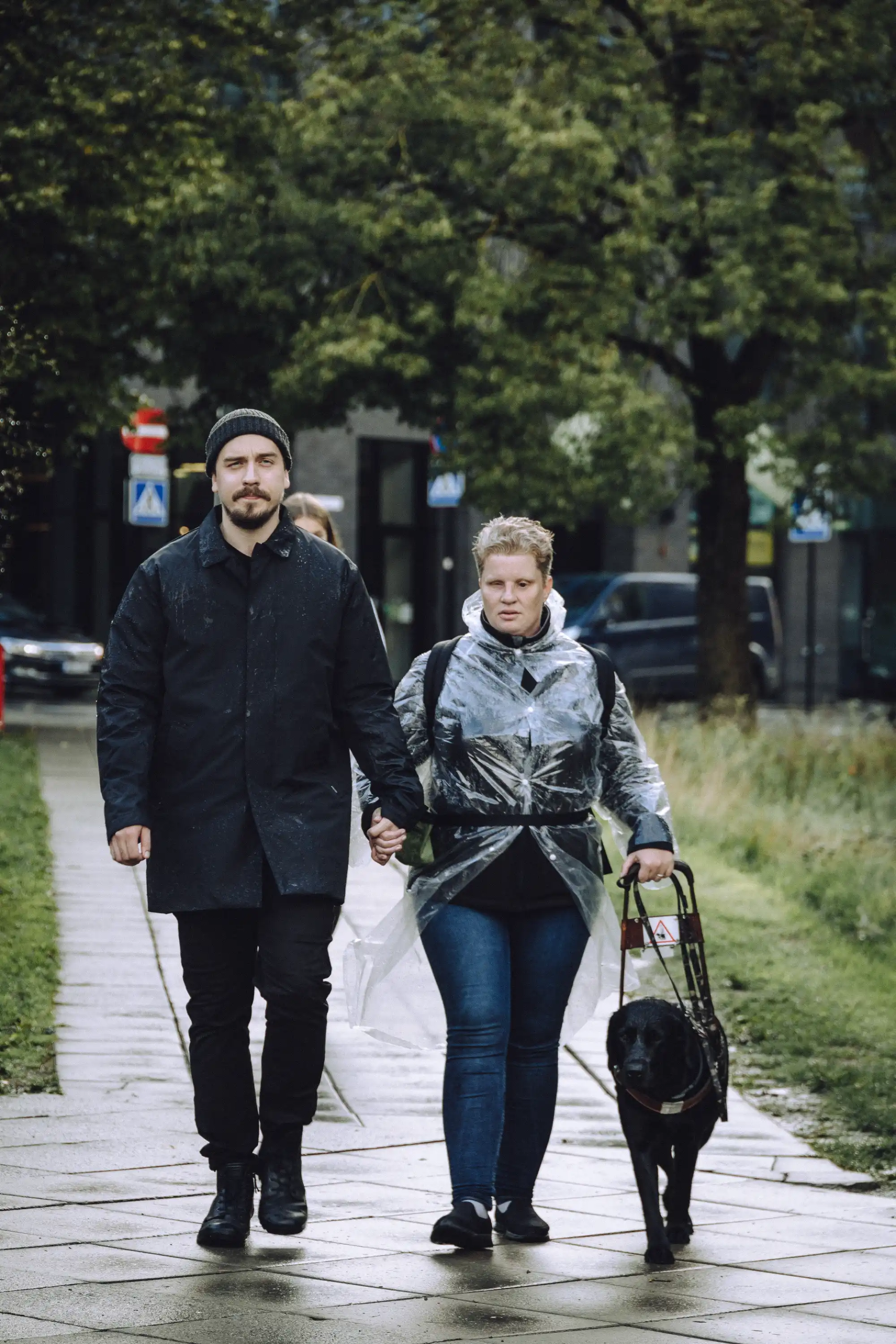
Walking:Holding invites you to walk hand in hand with a series of different local strangers around nearby streets, parks and alleyways. It is a participatory performance for one audience member at a time, offering a gentle meditation on identity, touch and intimacy in urban public space.
Detailed information:
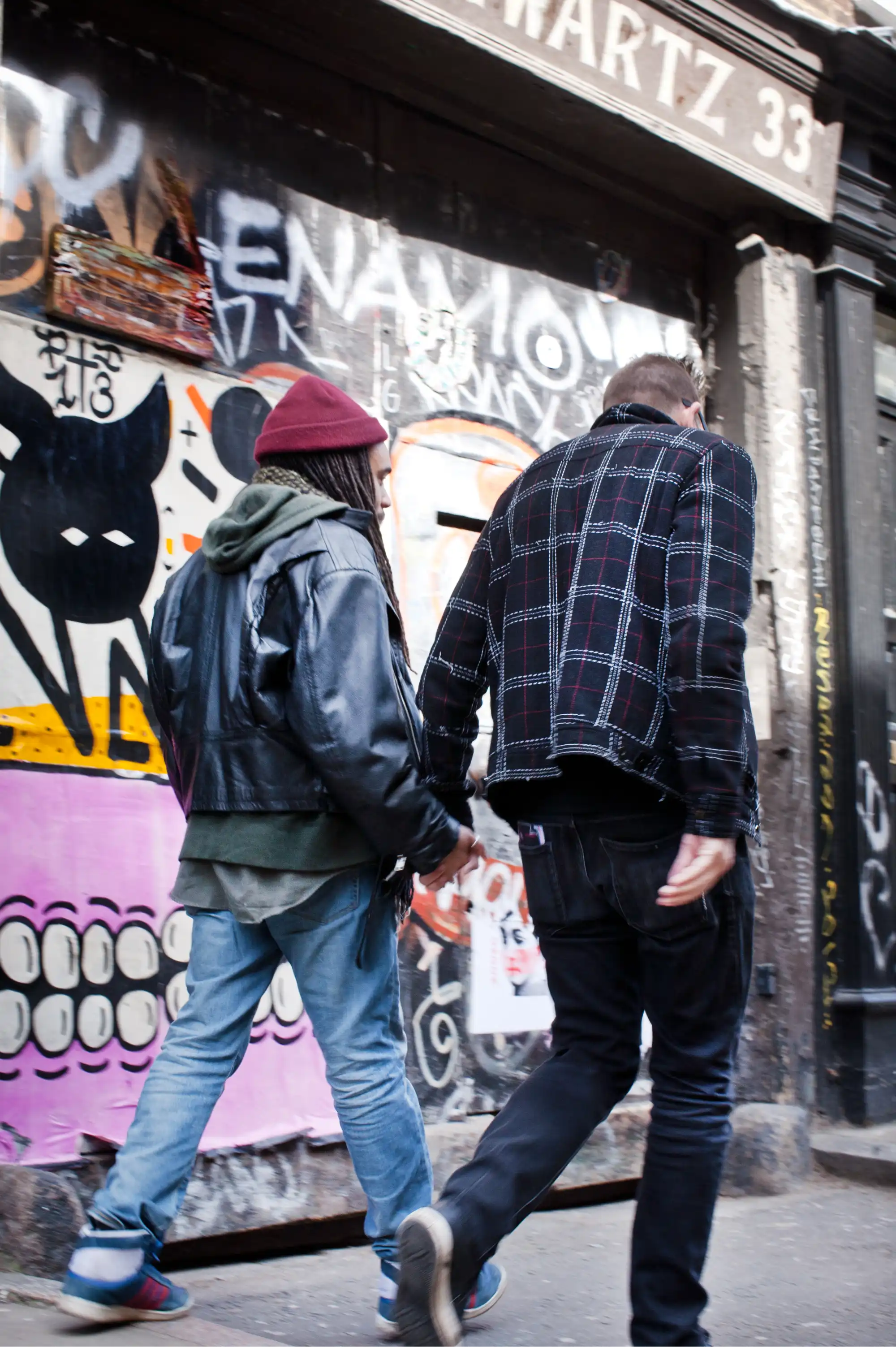
One audience member at a time starts every 15 minutes and is led on a walk through the city on a carefully crafted route, holding hands with a series of different strangers one after the other. It normally lasts around 45 minutes, and you meet and hold hands with 7 different people, as you traverse nearby alleyways, parks, shopping streets, and squares. Each new hand holder emerges out of the crowd in a different way, appearing next to you as you view your reflection in a shop window, putting their arm round you on a park bench, or getting up from a cafe table to take your hand. These people are a group of local participant performers who have different identities and different experiences of being in the city.
Walking:holding is partly about experiencing your town from someone else’s perspective, illuminating the ways in which our identity can affect our experience of different spaces. It’s also a gentle call for connection between strangers, asking what happens when we open our hands to each other in public.
I first created walking:holding in 2011, and have since toured it to over 40 locations across Europe, North America, Asia, and Australia working with local people in each place.
I have developed a holistic process for working with the participants across 2 weeks, which involves workshops, rehearsals, performances and reflections sessions. This process was developed with support from Laurie Brown who worked as a co-facilitator on the project between 2012 -19, and via a mentorship with Adrian Howells in 2013.
From 2016-18 I made a creative documentary based on the project in collaboration with film makers Claire Nolan and Charlie Cauchi, supported by the Jerwood Charitable Foundation and the Arts Council England.
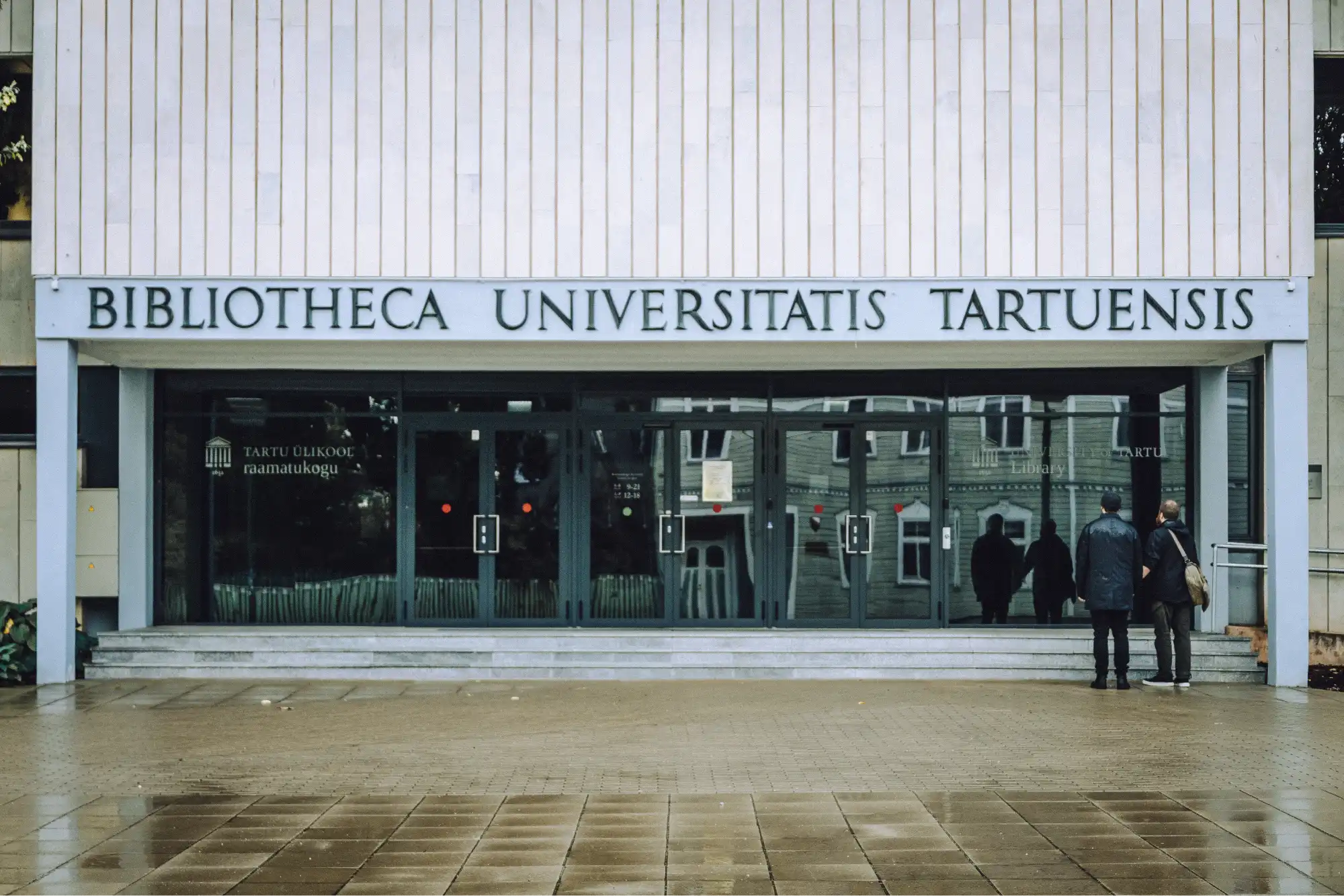
In 2020 I was invited by Homo Novus to develop a new process so that a local artist can lead the project without me traveling. Walking:Holding has since been presented like this in Riga, Tartu, Quebec, Ottawa, Montreal and Toronto. I am excited about the project continuing in this way in order to work sustainably and to continue to share and develop the practice with other artists.
Detailed information:
One audience member at a time starts every 15 minutes and is led on a walk through the city on a carefully crafted route, holding hands with a series of different strangers one after the other. It normally lasts around 45 minutes, and you meet and hold hands with 7 different people, as you traverse nearby alleyways, parks, shopping streets, and squares. Each new hand holder emerges out of the crowd in a different way, appearing next to you as you view your reflection in a shop window, putting their arm round you on a park bench, or getting up from a cafe table to take your hand. These people are a group of local participant performers who have different identities and different experiences of being in the city.
Walking:holding is partly about experiencing your town from someone else’s perspective, illuminating the ways in which our identity can affect our experience of different spaces. It’s also a gentle call for connection between strangers, asking what happens when we open our hands to each other in public.
I first created walking:holding in 2011, and have since toured it to over 40 locations across Europe, North America, Asia, and Australia working with local people in each place.
I have developed a holistic process for working with the participants across 2 weeks, which involves workshops, rehearsals, performances and reflections sessions. This process was developed with support from Laurie Brown who worked as a co-facilitator on the project between 2012 -19, and via a mentorship with Adrian Howells in 2013.
From 2016-18 I made a creative documentary based on the project in collaboration with film makers Claire Nolan and Charlie Cauchi, supported by the Jerwood Charitable Foundation and the Arts Council England.
In 2020 I was invited by Homo Novus to develop a new process so that a local artist can lead the project without me traveling. Walking:Holding has since been presented like this in Riga, Tartu, Quebec, Ottawa, Montreal and Toronto. I am excited about the project continuing in this way in order to work sustainably and to continue to share and develop the practice with other artists.
An article Rosana Wrote for the Guardian about Walking:Holding in 2016: Guardian Article
Audio documentation created in 2015 designed to be listened to in headphones whilst walking through public space:
Upcoming Performances
Past Performances
The Bentway
Toronto, Canada
Le Trillium
Ottawa, Canada
Le Périscope
Québec, Canada
Théâtre Prospero
Montreal, Canada
Urban Festival (UIT)
Tartu, Estonia
Homo Novus
Riga, Latvia
Beursschouwburg
Brussels, Belgium
Tanzquartier
Vienna, Austria
PUGS IN LOVE
Maxim Gorki Theatre
Berlin, Germany
Kampnagel
Hamburg, Germany
Wildwuchs Festival
Basel, Switzerland
Compass Live Art Festival
Leeds, England
1001 festival
Frankfurt, Germany
City of Women Festival
Ljubljana, Slovenia
DNweekeND
Doncaster, England
When I first created the work I was responding to my own experiences of same sex hand holding, and the complex tussle many of us navigate between visibility and vulnerability, public and private intimacy, activism and fear. I was interested in the distance between perceived equality through legislation and the reality of people’s lived experiences.
I began doing some experiments walking and holding hands with different people and I became fascinated by the multiple ways in which our identities - including gender, age, ethnicity, disability, class, and our personal history or relationship with certain places, as well as the cultural codes inscribed in the design and upheld by the masses, affect our experience of public spaces; as if we are all carrying round personal psychogeographic maps in our heads, constantly being etched with new memories as we move through the urban landscape. I became compelled by the idea that in cities we share the same places with hundreds of people everyday, but may all be having a different experience of that space.
So I created Walking:Holding with the desire to start to share and understand some of these differences. Initially I was very much thinking about the relationship between the person and the city, or the relationship between the pair and the public, who become a kind of unknowing secondary audience for the work. I sometimes like to think of it as a subtle pride march, meaning an area will be infiltrated with queer pairings over the days that it happens, without any explanation.
But there is another interaction which is equally significant in the work: the intimate relationship formed between the audience member and the performer. In different places, with different people, the dials on each of these dynamics vary.
It is a rare experience to be so close to a stranger, to allow yourself to be led, and to be given their undivided attention. Audience members are told before beginning that they can speak with the people they meet, there is no script, and it’s also fine if they want to be silent. The space this opens up can sometimes create moments of deep connection, or profound conversation with people feeling able to reveal things about themself they wouldn’t tell a close friend. I’ve realised there is something freeing in the structure of the work, in the moments of ephemeral intimacy which have clear boundaries. It is an opportunity for the audience member to be who they are in that moment with someone who has no prior knowledge of them, and whom they will probably never see again. The most common response to the project is one of joy, connection, liberation. The work opens up a space of possibility where we can imagine ourselves in very different identities and relationships with those around us.
In our competitive capitalist culture that teaches us to devalue our ties to others in order to succeed, and to mistrust strangers, Walking:Holding gives you an experience of walking through your town and imagining everyone as a potential hand holder or companion. Whilst it is about highlighting our differences, our privileges, and our subjectivity, it is also about connecting through hand holding to a shared humanity, and bringing attention to our interdependence, turning strangers into fellow humans and enlarging our capacity for empathy and connection.
When I first created the work I was responding to my own experiences of same sex hand holding, and the complex tussle many of us navigate between visibility and vulnerability, public and private intimacy, activism and fear. I was interested in the distance between perceived equality through legislation and the reality of people’s lived experiences.
I began doing some experiments walking and holding hands with different people and I became fascinated by the multiple ways in which our identities - including gender, age, ethnicity, disability, class, and our personal history or relationship with certain places, as well as the cultural codes inscribed in the design and upheld by the masses, affect our experience of public spaces; as if we are all carrying round personal psychogeographic maps in our heads, constantly being etched with new memories as we move through the urban landscape. I became compelled by the idea that in cities we share the same places with hundreds of people everyday, but may all be having a different experience of that space.
So I created Walking:Holding with the desire to start to share and understand some of these differences. Initially I was very much thinking about the relationship between the person and the city, or the relationship between the pair and the public, who become a kind of unknowing secondary audience for the work. I sometimes like to think of it as a subtle pride march, meaning an area will be infiltrated with queer pairings over the days that it happens, without any explanation.
But there is another interaction which is equally significant in the work: the intimate relationship formed between the audience member and the performer. In different places, with different people, the dials on each of these dynamics vary.
It is a rare experience to be so close to a stranger, to allow yourself to be led, and to be given their undivided attention. Audience members are told before beginning that they can speak with the people they meet, there is no script, and it’s also fine if they want to be silent. The space this opens up can sometimes create moments of deep connection, or profound conversation with people feeling able to reveal things about themself they wouldn’t tell a close friend. I’ve realised there is something freeing in the structure of the work, in the moments of ephemeral intimacy which have clear boundaries. It is an opportunity for the audience member to be who they are in that moment with someone who has no prior knowledge of them, and whom they will probably never see again. The most common response to the project is one of joy, connection, liberation. The work opens up a space of possibility where we can imagine ourselves in very different identities and relationships with those around us.
In our competitive capitalist culture that teaches us to devalue our ties to others in order to succeed, and to mistrust strangers, Walking:Holding gives you an experience of walking through your town and imagining everyone as a potential hand holder or companion. Whilst it is about highlighting our differences, our privileges, and our subjectivity, it is also about connecting through hand holding to a shared humanity, and bringing attention to our interdependence, turning strangers into fellow humans and enlarging our capacity for empathy and connection.